Buy familysearch.eu ?
We are moving the project
familysearch.eu .
Are you interested in purchasing the domain
familysearch.eu ?
domain@kv-gmbh.de · 0541-91531010
Buy familysearch.eu ?
What is better for genealogy research, Ancestry or MyHeritage?
Both Ancestry and MyHeritage are popular genealogy research platforms, and the choice between the two ultimately depends on individual preferences and needs. Ancestry has a larger database of historical records and documents, making it a great choice for those looking to delve deep into their family history. On the other hand, MyHeritage offers a more global approach, with a focus on international records and DNA testing. Both platforms have their own unique features and strengths, so it's best to explore both and see which one aligns best with your research goals. **
Why do Western nations get involved?
Western nations often get involved in international conflicts for a variety of reasons, including upholding democratic values, protecting human rights, promoting stability and security, and advancing their own strategic interests. Additionally, Western nations may intervene to prevent the spread of extremism or to fulfill international obligations and commitments. Economic considerations, such as access to resources or markets, can also play a role in their decision to get involved in conflicts around the world. **


Similar search terms for Profile-Books-Why-Nations
Top-Angebote
Products related to Profile-Books-Why-Nations:
-
Profile Books The Vital Question: Why Is Life The Way It Is Comprehensive Review - Non Fiction - PaperbackTitle:. The Vital Question: Why Is Life The Way It Is Format: Paperback Overview:. The Vital Question tackles one of biology’s most profound puzzles by tracing the relentless drive that shaped every living organism on Earth. Driven by the fundamental need to capture, convert, and distribute energy, life followed a rigid set of physical rules that determined whether species remained simple or grew in astonishing complexity. This accessible yet rigorous work explores cellular respiration, microbial ecosystems, and the ancient symbiotic events that gave rise to mitochondria, the tiny powerhouses governing animal, plant, and fungal development. By mapping how metabolic efficiency dictated evolutionary branching points, the narrative reveals why certain biological pathways flourished while others stalled. Readers gain a clear understanding of how microscopic chemical reactions echo far beyond the cell, influencing ecological balance, adaptation strategies, and even human health. The prose strips away dense jargon without diluting scientific accuracy, offering a cohesive framework that connects paleontology, modern physiology, and environmental science. Whether you are encountering these concepts for the first time or seeking a fresh perspective on established theories, this volume delivers a compelling case study of nature’s engineering. It serves as an essential guide for anyone craving meaningful context about where life began, how it transformed over billions of years, and what underlying mechanisms continue to sustain ecosystems today. What Makes This Book Stand Out:. What distinguishes this title from standard popular science releases is its unapologetic focus on energy as the primary currency of existence. Rather than relying solely on genetic mutations or natural selection as explanatory tools, the narrative centres on thermodynamic constraints and biochemical trading. This shift in perspective challenges conventional evolutionary models and encourages readers to reconsider how seemingly unrelated phenomena cell division, ageing, climate patterns, and resource competition are actually bound together by metabolic economics. The author successfully translates complex laboratory findings into vivid, logical argumentation, avoiding speculative leaps in favour of evidence-backed reasoning. Rich historical context surrounds the discovery of endosymbiosis, while contemporary research keeps the material firmly grounded in current academic discourse. Strategic visual aids and structural breaks clarify intricate biological processes without overwhelming the page layout. The result is a tightly constructed volume that rewards careful reading, offering sustained intellectual engagement rather than fleeting entertainment. By framing biological history as a continuous quest for energy efficiency, the book transforms abstract scientific theory into a tangible story of survival and adaptation that feels remarkably relevant to modern environmental and health...12,99 £*Shipping: 2,99 £Secure redirect to the provider
-
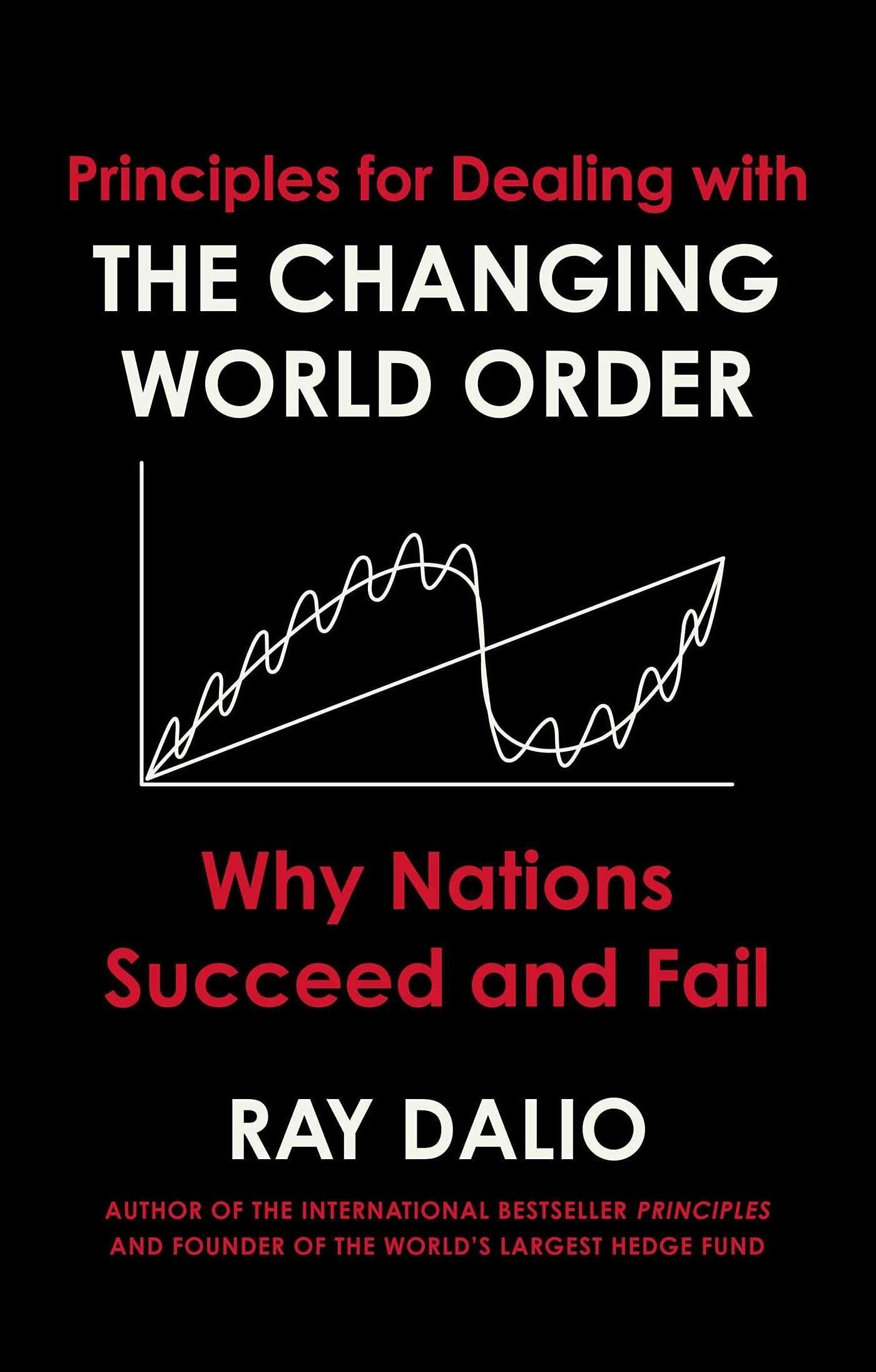
Simon & Schuster UK Principles for Dealing with the Changing World Order: Why Nations Succeed or Fail by Ray DalioFrom legendary investor Ray Dalio, author of the international bestseller Principles, who has spent half a century studying global economies and markets, Principles for Dealing with the Changing World Order examines history’s most turbulent economic and political periods to reveal why the times ahead will likely be radically different from those we’ve experienced in our lifetimes - but similar to those that have happened many times before. A few years ago, Ray Dalio noticed a confluence of political and economic conditions he hadn’t encountered before. They included huge debts and zero or near-zero interest rates that led to massive printing of money in the world’s three major reserve currencies; big political and social conflicts within countries, especially the US, due to the largest wealth, political and values disparities in more than 100 years; and the rising of a world power (China) to challenge the existing world power (US) and the existing world order. The last time that this confluence occurred was between 1930 and 1945. This realisation sent Dalio on a search for the repeating patterns and cause/effect relationships underlying all major changes in wealth and power over the last 500 years. In this remarkable and timely addition to his Principles series, Dalio brings readers along for his study of the major empires - including the Dutch, the British and the American - putting into perspective the 'Big Cycle' that has driven the successes and failures of all the world’s major countries throughout history. Dalio reveals the timeless and universal forces behind these shifts and uses them to look into the future, offering practical principles for positioning oneself for what’s ahead.13,99 £*Shipping: 2,99 £Secure redirect to the provider


-
Why are island nations called islands?
Island nations are called islands because they are made up of one or more islands. An island is a piece of land that is completely surrounded by water, and when multiple islands are grouped together to form a nation, it is referred to as an island nation. These nations are often characterized by their unique geography, culture, and reliance on the surrounding ocean for resources and transportation. **
-
What is more useful for genealogy research: Ancestry or MyHeritage?
Both Ancestry and MyHeritage are useful for genealogy research, but they have different strengths. Ancestry has a larger database of historical records and documents, making it a valuable resource for building family trees and finding historical records. On the other hand, MyHeritage offers a more global approach with a focus on international records and DNA testing, making it useful for those with ancestors from outside the United States. Ultimately, the choice between the two depends on the specific needs and research goals of the individual genealogist. **
-
Are research and science connecting people across nations?
Yes, research and science are connecting people across nations in several ways. Collaborative research projects bring together scientists and researchers from different countries to work towards common goals, fostering international cooperation and understanding. Additionally, scientific conferences and symposiums provide opportunities for experts from around the world to share their knowledge and findings, leading to the exchange of ideas and the establishment of international networks. Furthermore, the dissemination of scientific knowledge through publications and open-access journals allows researchers from different countries to access and build upon each other's work, further promoting global connectivity in the scientific community. **
-
Which DNA tests are best for genealogy research?
The best DNA tests for genealogy research are those offered by AncestryDNA, 23andMe, and MyHeritage. These tests provide a wide range of genetic information and have large databases for matching with potential relatives. AncestryDNA and 23andMe are particularly popular for their extensive databases and comprehensive ancestry reports, while MyHeritage offers a unique feature of matching with individuals who have uploaded their DNA data from other testing companies. Overall, these tests are highly recommended for genealogy research due to their accuracy and the potential for finding genetic relatives. **

Why do the Western nations get involved?
Western nations often get involved in international conflicts for a variety of reasons. These may include protecting their own national interests, such as access to resources or trade routes, promoting democracy and human rights, or fulfilling international obligations and alliances. Additionally, Western nations may also intervene in conflicts to prevent the spread of extremism or to maintain stability in regions that are strategically important to them. Overall, the motivations for Western involvement in international conflicts are complex and can vary depending on the specific circumstances of each situation. **
Are nations a quasi-natural unit of European history?
Nations are not a quasi-natural unit of European history, as they are socially constructed entities that have evolved over time through various political, cultural, and historical processes. The concept of nations as we know them today is a relatively modern phenomenon, emerging in the 19th and 20th centuries with the rise of nationalism. European history is characterized by a complex interplay of various ethnic, linguistic, and cultural groups, and the boundaries of nations have often been contested and redrawn throughout history. Therefore, nations should be seen as a fluid and dynamic aspect of European history rather than a fixed or natural unit. **
Top-Angebote
Products related to Profile-Books-Why-Nations:
-
Daron Acemoglu, Simon Johnson, Daron Acemoglu, James A. Robinson Daron Acemoglu Collection 2 Books Set Power and Progress, Why Nations FailDescription. Condition: BRAND NEW. Format: Paperback. Power and Progress: Our Thousand-Year Struggle Over Technology and Prosperity. 'A breathtaking tour of the history and future of technology' Abhijit Banerjee and Esther Duflo A bold new interpretation of why technology benefits the elites - and how we must reshape the path of innovation to create true shared prosperity. A thousand years of history make one thing clear: progress is not automatic but depends on the choices we make. Much of the wealth generated by agricultural advances during the Middle Ages was captured by the Church while the peasants starved. The first hundred years of industrialization delivered stagnant incomes for workers, while making a few people rich. Throughout the world today, digital technologies and artificial intelligence increase inequality and undermine democracy. It doesn't have to be this way.. Why Nations Fail: FROM THE WINNERS OF THE NOBEL PRIZE IN ECONOMICS. Why are some nations more prosperous than others? Why Nations Fail sets out to answer this question, with a compelling and elegantly argued new theory: that it is not down to climate, geography or culture, but because of institutions. Drawing on an extraordinary range of contemporary and historical examples, from ancient Rome through the Tudors to modern-day China, leading academics Daron Acemoglu and James A. Robinson show that to invest and prosper, people need to know that if they work hard, they can make money and actually keep it - and this means sound institutions that allow virtuous circles of innovation, expansion and peace. Based on fifteen years of research, and answering the competing arguments of authors ranging from Max Weber to Jeffrey Sachs and Jared Diamond.... Title. Daron Acemoglu Collection 2 Books Set Power and Progress, Why Nations Fail. Delivery. Content. Reviews20,49 £*Shipping: 2,99 £Secure redirect to the provider
-
Profile Books The Vital Question: Why Is Life The Way It Is Comprehensive Review - Non Fiction - PaperbackTitle:. The Vital Question: Why Is Life The Way It Is Format: Paperback Overview:. The Vital Question tackles one of biology’s most profound puzzles by tracing the relentless drive that shaped every living organism on Earth. Driven by the fundamental need to capture, convert, and distribute energy, life followed a rigid set of physical rules that determined whether species remained simple or grew in astonishing complexity. This accessible yet rigorous work explores cellular respiration, microbial ecosystems, and the ancient symbiotic events that gave rise to mitochondria, the tiny powerhouses governing animal, plant, and fungal development. By mapping how metabolic efficiency dictated evolutionary branching points, the narrative reveals why certain biological pathways flourished while others stalled. Readers gain a clear understanding of how microscopic chemical reactions echo far beyond the cell, influencing ecological balance, adaptation strategies, and even human health. The prose strips away dense jargon without diluting scientific accuracy, offering a cohesive framework that connects paleontology, modern physiology, and environmental science. Whether you are encountering these concepts for the first time or seeking a fresh perspective on established theories, this volume delivers a compelling case study of nature’s engineering. It serves as an essential guide for anyone craving meaningful context about where life began, how it transformed over billions of years, and what underlying mechanisms continue to sustain ecosystems today. What Makes This Book Stand Out:. What distinguishes this title from standard popular science releases is its unapologetic focus on energy as the primary currency of existence. Rather than relying solely on genetic mutations or natural selection as explanatory tools, the narrative centres on thermodynamic constraints and biochemical trading. This shift in perspective challenges conventional evolutionary models and encourages readers to reconsider how seemingly unrelated phenomena cell division, ageing, climate patterns, and resource competition are actually bound together by metabolic economics. The author successfully translates complex laboratory findings into vivid, logical argumentation, avoiding speculative leaps in favour of evidence-backed reasoning. Rich historical context surrounds the discovery of endosymbiosis, while contemporary research keeps the material firmly grounded in current academic discourse. Strategic visual aids and structural breaks clarify intricate biological processes without overwhelming the page layout. The result is a tightly constructed volume that rewards careful reading, offering sustained intellectual engagement rather than fleeting entertainment. By framing biological history as a continuous quest for energy efficiency, the book transforms abstract scientific theory into a tangible story of survival and adaptation that feels remarkably relevant to modern environmental and health...12,99 £*Shipping: 2,99 £Secure redirect to the provider
-
What is better for genealogy research, Ancestry or MyHeritage?
Both Ancestry and MyHeritage are popular genealogy research platforms, and the choice between the two ultimately depends on individual preferences and needs. Ancestry has a larger database of historical records and documents, making it a great choice for those looking to delve deep into their family history. On the other hand, MyHeritage offers a more global approach, with a focus on international records and DNA testing. Both platforms have their own unique features and strengths, so it's best to explore both and see which one aligns best with your research goals. **
-
Why do Western nations get involved?
Western nations often get involved in international conflicts for a variety of reasons, including upholding democratic values, protecting human rights, promoting stability and security, and advancing their own strategic interests. Additionally, Western nations may intervene to prevent the spread of extremism or to fulfill international obligations and commitments. Economic considerations, such as access to resources or markets, can also play a role in their decision to get involved in conflicts around the world. **
-
Why are island nations called islands?
Island nations are called islands because they are made up of one or more islands. An island is a piece of land that is completely surrounded by water, and when multiple islands are grouped together to form a nation, it is referred to as an island nation. These nations are often characterized by their unique geography, culture, and reliance on the surrounding ocean for resources and transportation. **
-
What is more useful for genealogy research: Ancestry or MyHeritage?
Both Ancestry and MyHeritage are useful for genealogy research, but they have different strengths. Ancestry has a larger database of historical records and documents, making it a valuable resource for building family trees and finding historical records. On the other hand, MyHeritage offers a more global approach with a focus on international records and DNA testing, making it useful for those with ancestors from outside the United States. Ultimately, the choice between the two depends on the specific needs and research goals of the individual genealogist. **
Similar search terms for Profile-Books-Why-Nations
-
Simon & Schuster UK Principles for Dealing with the Changing World Order: Why Nations Succeed or Fail by Ray DalioFrom legendary investor Ray Dalio, author of the international bestseller Principles, who has spent half a century studying global economies and markets, Principles for Dealing with the Changing World Order examines history’s most turbulent economic and political periods to reveal why the times ahead will likely be radically different from those we’ve experienced in our lifetimes - but similar to those that have happened many times before. A few years ago, Ray Dalio noticed a confluence of political and economic conditions he hadn’t encountered before. They included huge debts and zero or near-zero interest rates that led to massive printing of money in the world’s three major reserve currencies; big political and social conflicts within countries, especially the US, due to the largest wealth, political and values disparities in more than 100 years; and the rising of a world power (China) to challenge the existing world power (US) and the existing world order. The last time that this confluence occurred was between 1930 and 1945. This realisation sent Dalio on a search for the repeating patterns and cause/effect relationships underlying all major changes in wealth and power over the last 500 years. In this remarkable and timely addition to his Principles series, Dalio brings readers along for his study of the major empires - including the Dutch, the British and the American - putting into perspective the 'Big Cycle' that has driven the successes and failures of all the world’s major countries throughout history. Dalio reveals the timeless and universal forces behind these shifts and uses them to look into the future, offering practical principles for positioning oneself for what’s ahead.13,99 £*Shipping: 2,99 £Secure redirect to the provider
-
Profile Books A Cheesemonger's History of The British Isles - Non Fiction - PaperbackTitle:. A Cheesemonger's History of The British Isles Overview:. Enter the curious universe where Britain's past is tasted, slivered, and celebrated in every slice. A Cheesemonger’s History of The British Isles takes readers on a flavorful journey through centuries of cheese-making, trade, and culture, using dairy as a lens to illuminate society. From the earliest dairying practices to the rise of farmhouse cheesemaking, Ned Palmer threads anecdote, fact, and tasting note into a lively survey of how cheese and people shaped one another. The book invites food lovers, history buffs, and curious cooks to read with their palates as guides: you’ll learn why certain cheeses rose to prominence in particular regions, how political shifts altered production, and what the daily lives of shepherds, merchants, and cooks reveal about broader social change. With accessible prose, clear chronological threads, and vivid descriptions of texture and aroma, this is as much a travelogue of the British Isles as it is a history of its dairy industry. A perfect gift for anyone who cherishes culinary history, memoir-like storytelling, or simply a delicious doorway into Britain’s cultural landscape. It makes the past tangible, delicious, and incredibly inviting. What Makes This Book Stand Out:. Ned Palmer writes with the warm authority of a seasoned cheesemonger, turning shelves of history into a tasting menu. The book’s strength lies in treating cheese not as mere commodity but as a gateway to people, places, and pivotal moments in British and Irish history. Palmer’s approach blends vivid sensory detail with rigorous anecdote, so readers feel tasting notes in their mouths while absorbing how cheese routes wealth, power, and social change. Each chapter anchors a region or era, then widens into a broader narrative—a storytelling rhythm that makes complex history feel intimate and accessible. The result works for lay readers and history enthusiasts alike: a readable, endlessly fascinating exploration of culture through the dairy counter and the table. Who This Book Is Perfect For:. Ideal for curious adults who love non-fiction histories, culinary writing, and the story behind the foods we take for granted. It’s a superb pick for cheese lovers seeking context for flavours, history fans wanting a tangible angle on Britain’s past, and readers who enjoy immersive, gently humorous storytelling. Perfect as a gift for a foodie friend, a student researching foodways, or anyone who enjoys a well-crafted narrative that nourishes both mind and palate. Whether you’re stocking a kitchen bookshelf or hunting for a thoughtful present for a foodie, this title delivers a distinctive, delicious reading experience. Key Highlights:. Unique fusion of history and cheese, seen through a practical, sensory lens. Accessible narrative non-fiction that entertains as it informs. Rich exploration of regional cheeses and their social contexts. Clear, engaging structure that guides readers along...11,99 £*Shipping: 2,99 £Secure redirect to the provider
-
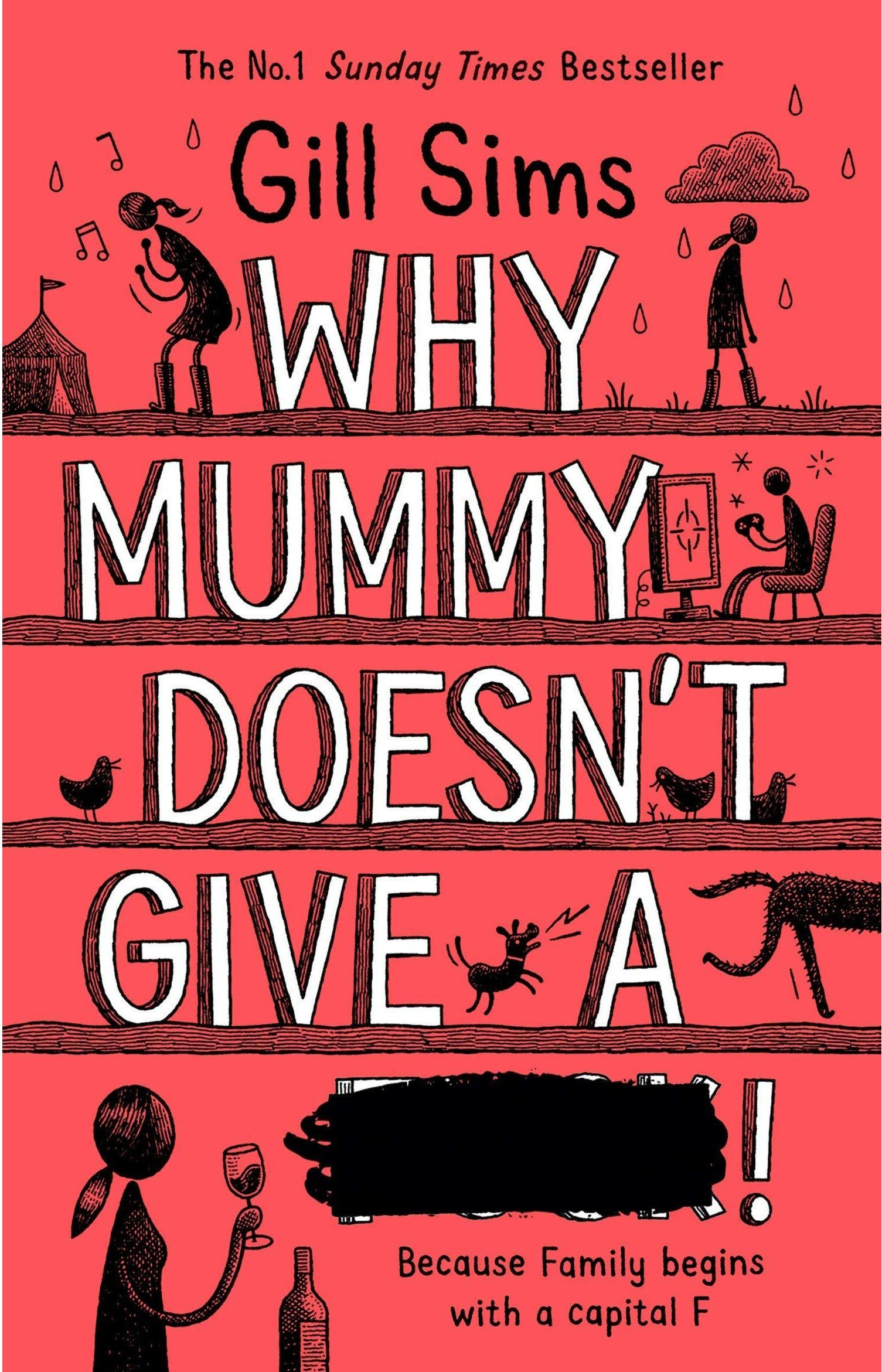
HARPERCOLLINS Gill Sims Why Mummy Series Collection 4 Books Set (Why Mummy Drinks, Why Mummy Swears, Why Mummy Does not Give a, Why Mummys Sloshed)Why Mummy Drinks It is Mummy’s 39th birthday. She is staring down the barrel of a future of people asking if she wants to come to their advanced yoga classes, and polite book clubs where everyone claims to be tiddly after a glass of Pinot Grigio and says things like ‘Oooh gosh, are you having another glass?’Why Mummy Swears The Boy Child Peter is connected to his iPad by an umbilical cord, The Girl Child Jane is desperate to make her fortune as an Instagram lifestyle influencer, while Daddy is constantly off on exotic business trips…Mummy’s marriage is feeling the strain, her kids are running wild and the house is steadily developing a forest of mould. Only Judgy, the Proud and Noble Terrier, remains loyal as always.Why Mummy Doesn’t Give a ****! Mummy dreams of a quirky rural cottage with roses around the door and chatty chickens in the garden. Life, as ever, is not going quite as she planned. Paxo, Oxo and Bisto turn out to be highly rambunctious, rather than merely chatty, and the roses have jaggy thorns. Her precious moppets are now giant teenagers, and instead of wittering at her about who would win in a fight – a dragon badger or a ninja horse – they are Snapchatting the night away.Why Mummy’s Sloshed Mummy has been a wife and mother for so long that she’s a little bit lost. And despite her best efforts, her precious moppets still don’t know the location of the laundry basket, the difference between being bored and being hungry, or that saying ‘I can’t find it Mummy’ is not the same as actually looking for it.15,95 £*Shipping: 2,99 £Secure redirect to the provider
-
Are research and science connecting people across nations?
Yes, research and science are connecting people across nations in several ways. Collaborative research projects bring together scientists and researchers from different countries to work towards common goals, fostering international cooperation and understanding. Additionally, scientific conferences and symposiums provide opportunities for experts from around the world to share their knowledge and findings, leading to the exchange of ideas and the establishment of international networks. Furthermore, the dissemination of scientific knowledge through publications and open-access journals allows researchers from different countries to access and build upon each other's work, further promoting global connectivity in the scientific community. **
-
Which DNA tests are best for genealogy research?
The best DNA tests for genealogy research are those offered by AncestryDNA, 23andMe, and MyHeritage. These tests provide a wide range of genetic information and have large databases for matching with potential relatives. AncestryDNA and 23andMe are particularly popular for their extensive databases and comprehensive ancestry reports, while MyHeritage offers a unique feature of matching with individuals who have uploaded their DNA data from other testing companies. Overall, these tests are highly recommended for genealogy research due to their accuracy and the potential for finding genetic relatives. **
-
Why do the Western nations get involved?
Western nations often get involved in international conflicts for a variety of reasons. These may include protecting their own national interests, such as access to resources or trade routes, promoting democracy and human rights, or fulfilling international obligations and alliances. Additionally, Western nations may also intervene in conflicts to prevent the spread of extremism or to maintain stability in regions that are strategically important to them. Overall, the motivations for Western involvement in international conflicts are complex and can vary depending on the specific circumstances of each situation. **
-
Are nations a quasi-natural unit of European history?
Nations are not a quasi-natural unit of European history, as they are socially constructed entities that have evolved over time through various political, cultural, and historical processes. The concept of nations as we know them today is a relatively modern phenomenon, emerging in the 19th and 20th centuries with the rise of nationalism. European history is characterized by a complex interplay of various ethnic, linguistic, and cultural groups, and the boundaries of nations have often been contested and redrawn throughout history. Therefore, nations should be seen as a fluid and dynamic aspect of European history rather than a fixed or natural unit. **
* All prices are inclusive of VAT and, if applicable, plus shipping costs. The offer information is based on the details provided by the respective shop and is updated through automated processes. Real-time updates do not occur, so deviations can occur in individual cases. ** Note: Parts of this content were created by AI.