Buy familysearch.eu ?
We are moving the project
familysearch.eu .
Are you interested in purchasing the domain
familysearch.eu ?
domain@kv-gmbh.de · 0541-91531010
Buy familysearch.eu ?
What is better for genealogy research, Ancestry or MyHeritage?
Both Ancestry and MyHeritage are popular genealogy research platforms, and the choice between the two ultimately depends on individual preferences and needs. Ancestry has a larger database of historical records and documents, making it a great choice for those looking to delve deep into their family history. On the other hand, MyHeritage offers a more global approach, with a focus on international records and DNA testing. Both platforms have their own unique features and strengths, so it's best to explore both and see which one aligns best with your research goals. **
What is more useful for genealogy research: Ancestry or MyHeritage?
Both Ancestry and MyHeritage are useful for genealogy research, but they have different strengths. Ancestry has a larger database of historical records and documents, making it a valuable resource for building family trees and finding historical records. On the other hand, MyHeritage offers a more global approach with a focus on international records and DNA testing, making it useful for those with ancestors from outside the United States. Ultimately, the choice between the two depends on the specific needs and research goals of the individual genealogist. **
Similar search terms for Harriman-House-The-Psychology
Top-Angebote
Products related to Harriman-House-The-Psychology:
-
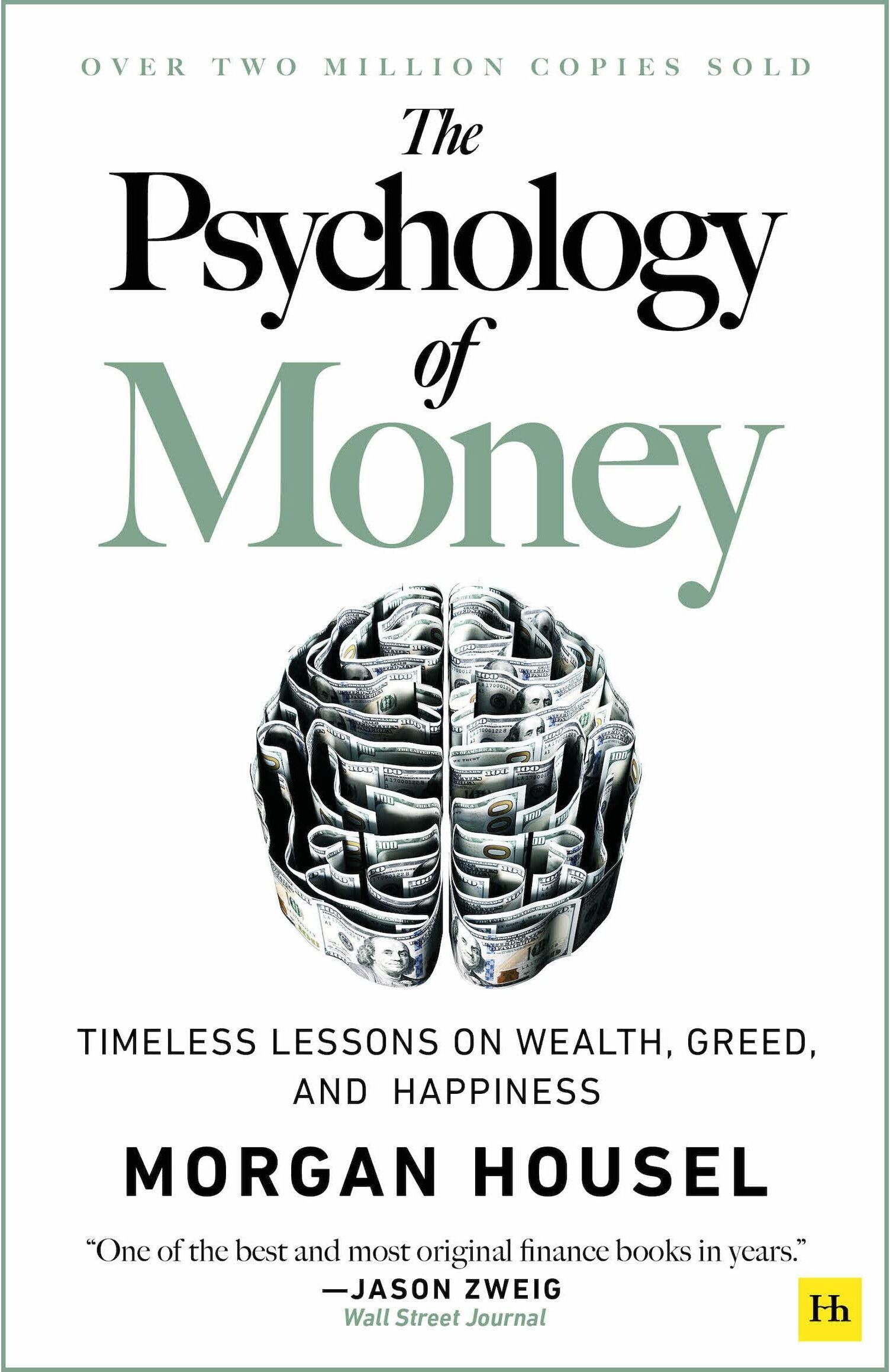
Harriman House The Psychology of Money: Timeless lessons on wealth, greed, and happiness by Morgan HouselDoing well with money isn't necessarily about what you know. It's about how you behave. And behavior is hard to teach, even to really smart people.Money investing, personal finance, and business decisions is typically taught as a math-based field, where data and formulas tell us exactly what to do. But in the real world people don't make financial decisions on a spreadsheet. They make them at the dinner table, or in a meeting room, where personal history, your own unique view of the world, ego, pride, marketing, and odd incentives are scrambled together.In The Psychology of Money, award-winning author Morgan Housel shares 19 short stories exploring the strange ways people think about money and teaches you how to make better sense of one of life's most important topics.10,99 £*Shipping: 2,99 £Secure redirect to the provider
-
Harriman House Same as Ever & The Psychology Of Money 2 Books Collection Set by Morgan HouselTitles in this set:1. Same as Ever2. The Psychology of MoneyDescription:Same as Ever When planning for the future we often ask, “What will the economy be doing this time next year?” Or, “What will be different ten years from now?”But forecasting is hard. The important events that will shape the future are inherently unpredictable.Instead, we should be asking a different question:What will be the same ten years from now?What will be the same one hundred years from now?Knowledge of the things that never change is more useful, and more important, than an uncertain prediction of an unknowable future.In Same As Ever, bestselling author Morgan Housel shares 24 short stories about the ways that life, behaviour, and business will always be the same.Armed with this knowledge of the unchanging, you will have a powerful new ability to think about risk, opportunity, and how to navigate the uncertainty of the future.The Psychology of Money Doing well with money isn't necessarily about what you know. It's about how you behave. And behavior is hard to teach, even to really smart people.Money investing, personal finance, and business decisions is typically taught as a math-based field, where data and formulas tell us exactly what to do. But in the real world people don't make financial decisions on a spreadsheet. They make them at the dinner table, or in a meeting room, where personal history, your own unique view of the world, ego, pride, marketing, and odd incentives are scrambled together.In The Psychology of Money, award-winning author Morgan Housel shares 19 short stories exploring the strange ways people think about money and teaches you how to make better sense of one of life's most important topics.14,50 £*Shipping: 2,99 £Secure redirect to the provider
-
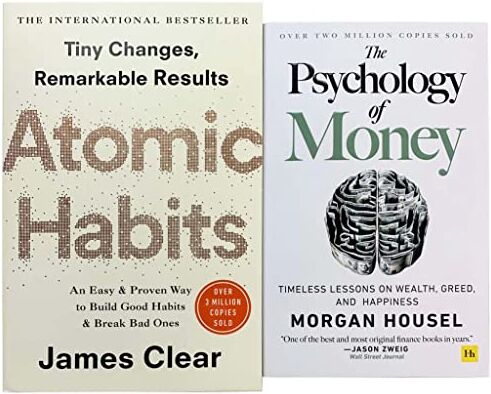
Random House Business/Harriman House ltd Atomic Habits & The Psychology of Money – 2 Books Collection Set Personal Growth, Wealth & Mindset BestsellersAtomic Habits People think that when you want to change your life, you need to think big. But world-renowned habits expert James Clear has discovered another way. He knows that real change comes from the compound effect of hundreds of small decisions: doing two push-ups a day, waking up five minutes early, or holding a single short phone call. He calls them atomic habits. In this ground-breaking book, Clears reveals exactly how these minuscule changes can grow into such life-altering outcomes. He uncovers a handful of simple life hacks (the forgotten art of Habit Stacking, the unexpected power of the Two Minute Rule, or the trick to entering the Goldilocks Zone), and delves into cutting-edge psychology and neuroscience to explain why they matter. Along the way, he tells inspiring stories of Olympic gold medalists, leading CEOs, and distinguished scientists who have used the science of tiny habits to stay productive, motivated, and happy. The Psychology of Money Doing well with money isn't necessarily about what you know. It's about how you behave. And behaviour is hard to teach, even to really smart people. Money investing, personal finance, and business decisions is typically taught as a math-based field, where data and formulas tell us exactly what to do. But in the real world people don't make financial decisions on a spreadsheet. They make them at the dinner table, or in a meeting room, where personal history, your own unique view of the world, ego, pride, marketing, and odd incentives are scrambled together. In The Psychology of Money, award-winning author Morgan Housel shares 19 short stories exploring the strange ways people think about money and teaches you how to make better sense of one of life's most important topics.15,99 £*Shipping: 2,99 £Secure redirect to the provider
-
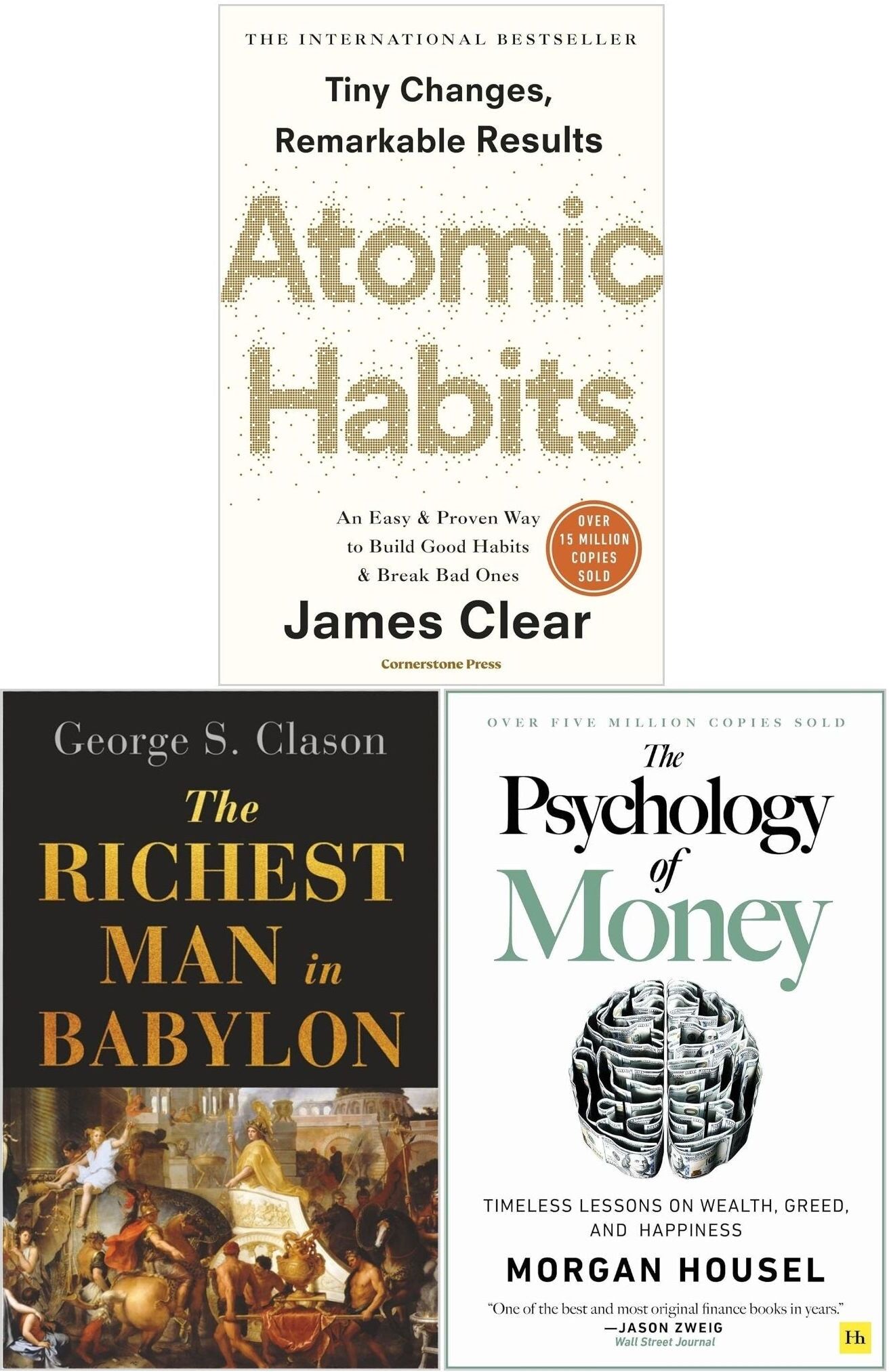
Wilco/Harriman House/Cornerstone The Richest Man In Babylon, The Psychology of Money and Atomic Habits 3 Books SetThe Richest Man In Babylon by George S. Clason This inspirational book is hailed as the greatest of books on finances. It unveils the secrets to wealth, providing priceless suggestions, advice, unforgettable parables, financial problem solving tools, and invaluable information which will get you on your way to riches. It is a must read for all who want financial stability. It rapidly became one of the best-selling books of all time. Through a series of enlightening parables set in the heart of ancient Babylon, Clason provided his readers with economic tips and tools for financial success. The Psychology of Money by Morgan Housel Doing well with money isn't necessarily about what you know. It's about how you behave. And behavior is hard to teach, even to really smart people. Money – investing, personal finance, and business decisions – is typically taught as a math-based field, where data and formulas tell us exactly what to do. But in the real world people don't make financial decisions on a spreadsheet. They make them at the dinner table, or in a meeting room, where personal history, your own unique view of the world, ego, pride, marketing, and odd incentives are scrambled together. Atomic Habits by James Clear Transform your life with tiny changes in behaviour, starting now. People think that when you want to change your life, you need to think big. But world-renowned habits expert James Clear has discovered another way. He knows that real change comes from the compound effect of hundreds of small decisions: doing two push-ups a day, waking up five minutes early, or holding a single short phone call. He calls them atomic habits.22,99 £*Shipping: 2,99 £Secure redirect to the provider

-
Which DNA tests are best for genealogy research?
The best DNA tests for genealogy research are those offered by AncestryDNA, 23andMe, and MyHeritage. These tests provide a wide range of genetic information and have large databases for matching with potential relatives. AncestryDNA and 23andMe are particularly popular for their extensive databases and comprehensive ancestry reports, while MyHeritage offers a unique feature of matching with individuals who have uploaded their DNA data from other testing companies. Overall, these tests are highly recommended for genealogy research due to their accuracy and the potential for finding genetic relatives. **
-
How can one conduct genealogy research using DNA tests?
To conduct genealogy research using DNA tests, one can start by choosing a reputable DNA testing company and ordering a DNA test kit. Once the kit arrives, follow the instructions to collect a DNA sample, typically through a saliva sample. After sending the sample back to the company, wait for the results to be processed. The results will provide information about one's genetic ethnicity and potential matches with other individuals who share DNA. By comparing these matches with known family history and genealogy records, one can potentially uncover new information about their ancestry and family connections. **
-
What is the research question in psychology?
The research question in psychology is a specific inquiry that a researcher aims to answer through systematic investigation and analysis. It typically focuses on understanding human behavior, cognition, emotions, or mental processes. Research questions in psychology are designed to be clear, specific, and testable, guiding the research process and helping to generate new knowledge and insights in the field. By formulating research questions, psychologists can explore various phenomena, theories, and hypotheses to advance our understanding of the human mind and behavior. **
-
What are possible research topics in psychology?
Possible research topics in psychology include studying the effects of social media on mental health, exploring the impact of childhood trauma on adult relationships, investigating the effectiveness of different therapy techniques for treating anxiety disorders, examining the relationship between personality traits and academic success, and researching the factors that contribute to the development of eating disorders. These topics offer a wide range of opportunities for researchers to deepen our understanding of human behavior and mental processes. **

What is the DNA Ancestry Test?
The DNA Ancestry Test is a genetic test that analyzes an individual's DNA to provide information about their ethnic and geographic origins. It can help people trace their ancestry back to specific regions or populations around the world. The test compares the individual's DNA to reference databases of genetic markers from different populations to estimate their genetic ancestry. This can provide insights into a person's heritage and help them better understand their genetic background. **
Which courses combine biology, history, and psychology?
Courses such as Behavioral Genetics, Evolutionary Psychology, and History of Medicine often combine elements of biology, history, and psychology. These courses explore how biological factors influence behavior, how historical events have shaped our understanding of medicine and psychology, and how psychological theories have evolved over time. Students in these courses can gain a comprehensive understanding of the interconnectedness of these disciplines and how they contribute to our understanding of human behavior and health. **
Top-Angebote
Products related to Harriman-House-The-Psychology:
-
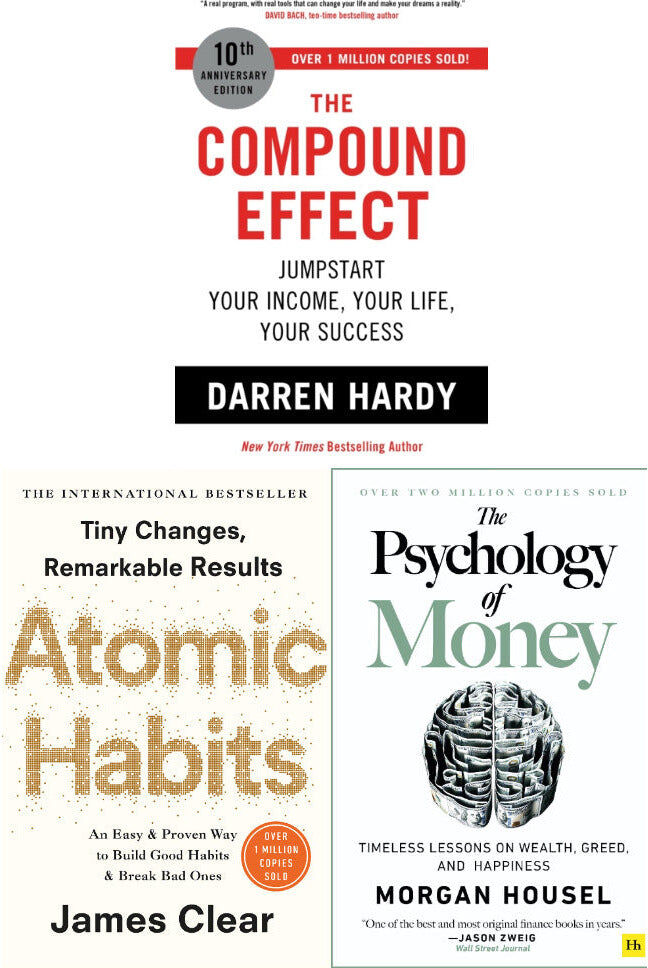
Harriman House Atomic Habits, The Compound Effect, The Psychology of Money 3 Books Collection SetAtomic Habits People think that when you want to change your life, you need to think big. But world-renowned habits expert James Clear has discovered another way. He knows that real change comes from the compound effect of hundreds of small decisions: doing two push-ups a day, waking up five minutes early, or holding a single short phone call. The Compound Effect As the central curator of the success media industry for over 25 years, author Darren Hardy has heard it all, seen it all, and tried most of it. This book reveals the core principles that drive success. The Compound Effect contains the essence of what every superachiever needs to know, practice, and master to obtain extraordinary success. Inside you will find strategies on: How to win--every time! The Psychology of Money Doing well with money isn't necessarily about what you know. It's about how you behave. And behavior is hard to teach, even to really smart people. Money investing, personal finance, and business decisions is typically taught as a math-based field, where data and formulas tell us exactly what to do. But in the real world people don't make financial decisions on a spreadsheet.22,95 £*Shipping: 2,99 £Secure redirect to the provider
-
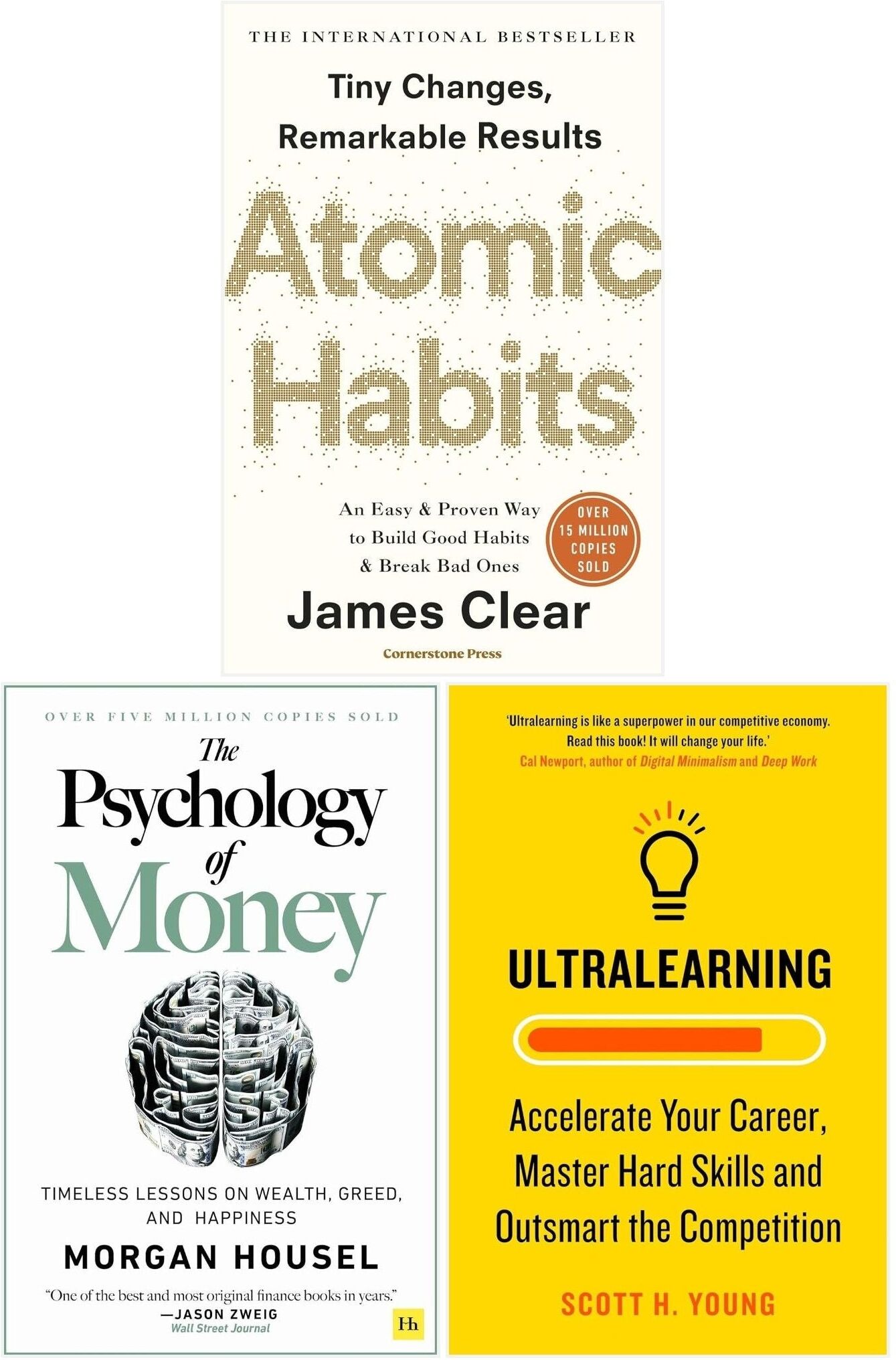
Thorsons/Cornerstone/Harriman House Ultralearning, Atomic Habits and The Psychology of Money 3 Books SetUltralearning Future-proof your career and maximize your competitive advantage by learning the skill necessary to stay relevant, reinvent yourself, and adapt to whatever the workplace throws your way in this essential guide. Faced with tumultuous economic times and rapid technological change, staying ahead in your career depends on continual learning―a lifelong mastery of new ideas, subjects, and skills. If you want to accomplish more and stand apart from everyone else, you need to become an ultralearner. Atomic Habits Transform your life with tiny changes in behaviour, starting now. People think that when you want to change your life, you need to think big. But world-renowned habits expert James Clear has discovered another way. He knows that real change comes from the compound effect of hundreds of small decisions: doing two push-ups a day, waking up five minutes early, or holding a single short phone call. The Psychology of Money Doing well with money isn't necessarily about what you know. It's about how you behave. And behavior is hard to teach, even to really smart people. Money investing, personal finance, and business decisions is typically taught as a math-based field, where data and formulas tell us exactly what to do. But in the real world people don't make financial decisions on a spreadsheet. They make them at the dinner table, or in a meeting room, where personal history, your own unique view of the world, ego, pride, marketing, and odd incentives are scrambled together.29,99 £*Shipping: 2,99 £Secure redirect to the provider
-
Harriman House The Psychology of Money: Timeless lessons on wealth, greed, and happiness by Morgan HouselDoing well with money isn't necessarily about what you know. It's about how you behave. And behavior is hard to teach, even to really smart people.Money investing, personal finance, and business decisions is typically taught as a math-based field, where data and formulas tell us exactly what to do. But in the real world people don't make financial decisions on a spreadsheet. They make them at the dinner table, or in a meeting room, where personal history, your own unique view of the world, ego, pride, marketing, and odd incentives are scrambled together.In The Psychology of Money, award-winning author Morgan Housel shares 19 short stories exploring the strange ways people think about money and teaches you how to make better sense of one of life's most important topics.10,99 £*Shipping: 2,99 £Secure redirect to the provider
-
Harriman House Same as Ever & The Psychology Of Money 2 Books Collection Set by Morgan HouselTitles in this set:1. Same as Ever2. The Psychology of MoneyDescription:Same as Ever When planning for the future we often ask, “What will the economy be doing this time next year?” Or, “What will be different ten years from now?”But forecasting is hard. The important events that will shape the future are inherently unpredictable.Instead, we should be asking a different question:What will be the same ten years from now?What will be the same one hundred years from now?Knowledge of the things that never change is more useful, and more important, than an uncertain prediction of an unknowable future.In Same As Ever, bestselling author Morgan Housel shares 24 short stories about the ways that life, behaviour, and business will always be the same.Armed with this knowledge of the unchanging, you will have a powerful new ability to think about risk, opportunity, and how to navigate the uncertainty of the future.The Psychology of Money Doing well with money isn't necessarily about what you know. It's about how you behave. And behavior is hard to teach, even to really smart people.Money investing, personal finance, and business decisions is typically taught as a math-based field, where data and formulas tell us exactly what to do. But in the real world people don't make financial decisions on a spreadsheet. They make them at the dinner table, or in a meeting room, where personal history, your own unique view of the world, ego, pride, marketing, and odd incentives are scrambled together.In The Psychology of Money, award-winning author Morgan Housel shares 19 short stories exploring the strange ways people think about money and teaches you how to make better sense of one of life's most important topics.14,50 £*Shipping: 2,99 £Secure redirect to the provider
-
What is better for genealogy research, Ancestry or MyHeritage?
Both Ancestry and MyHeritage are popular genealogy research platforms, and the choice between the two ultimately depends on individual preferences and needs. Ancestry has a larger database of historical records and documents, making it a great choice for those looking to delve deep into their family history. On the other hand, MyHeritage offers a more global approach, with a focus on international records and DNA testing. Both platforms have their own unique features and strengths, so it's best to explore both and see which one aligns best with your research goals. **
-
What is more useful for genealogy research: Ancestry or MyHeritage?
Both Ancestry and MyHeritage are useful for genealogy research, but they have different strengths. Ancestry has a larger database of historical records and documents, making it a valuable resource for building family trees and finding historical records. On the other hand, MyHeritage offers a more global approach with a focus on international records and DNA testing, making it useful for those with ancestors from outside the United States. Ultimately, the choice between the two depends on the specific needs and research goals of the individual genealogist. **
-
Which DNA tests are best for genealogy research?
The best DNA tests for genealogy research are those offered by AncestryDNA, 23andMe, and MyHeritage. These tests provide a wide range of genetic information and have large databases for matching with potential relatives. AncestryDNA and 23andMe are particularly popular for their extensive databases and comprehensive ancestry reports, while MyHeritage offers a unique feature of matching with individuals who have uploaded their DNA data from other testing companies. Overall, these tests are highly recommended for genealogy research due to their accuracy and the potential for finding genetic relatives. **
-
How can one conduct genealogy research using DNA tests?
To conduct genealogy research using DNA tests, one can start by choosing a reputable DNA testing company and ordering a DNA test kit. Once the kit arrives, follow the instructions to collect a DNA sample, typically through a saliva sample. After sending the sample back to the company, wait for the results to be processed. The results will provide information about one's genetic ethnicity and potential matches with other individuals who share DNA. By comparing these matches with known family history and genealogy records, one can potentially uncover new information about their ancestry and family connections. **
Similar search terms for Harriman-House-The-Psychology
-
Random House Business/Harriman House ltd Atomic Habits & The Psychology of Money – 2 Books Collection Set Personal Growth, Wealth & Mindset BestsellersAtomic Habits People think that when you want to change your life, you need to think big. But world-renowned habits expert James Clear has discovered another way. He knows that real change comes from the compound effect of hundreds of small decisions: doing two push-ups a day, waking up five minutes early, or holding a single short phone call. He calls them atomic habits. In this ground-breaking book, Clears reveals exactly how these minuscule changes can grow into such life-altering outcomes. He uncovers a handful of simple life hacks (the forgotten art of Habit Stacking, the unexpected power of the Two Minute Rule, or the trick to entering the Goldilocks Zone), and delves into cutting-edge psychology and neuroscience to explain why they matter. Along the way, he tells inspiring stories of Olympic gold medalists, leading CEOs, and distinguished scientists who have used the science of tiny habits to stay productive, motivated, and happy. The Psychology of Money Doing well with money isn't necessarily about what you know. It's about how you behave. And behaviour is hard to teach, even to really smart people. Money investing, personal finance, and business decisions is typically taught as a math-based field, where data and formulas tell us exactly what to do. But in the real world people don't make financial decisions on a spreadsheet. They make them at the dinner table, or in a meeting room, where personal history, your own unique view of the world, ego, pride, marketing, and odd incentives are scrambled together. In The Psychology of Money, award-winning author Morgan Housel shares 19 short stories exploring the strange ways people think about money and teaches you how to make better sense of one of life's most important topics.15,99 £*Shipping: 2,99 £Secure redirect to the provider
-
Wilco/Harriman House/Cornerstone The Richest Man In Babylon, The Psychology of Money and Atomic Habits 3 Books SetThe Richest Man In Babylon by George S. Clason This inspirational book is hailed as the greatest of books on finances. It unveils the secrets to wealth, providing priceless suggestions, advice, unforgettable parables, financial problem solving tools, and invaluable information which will get you on your way to riches. It is a must read for all who want financial stability. It rapidly became one of the best-selling books of all time. Through a series of enlightening parables set in the heart of ancient Babylon, Clason provided his readers with economic tips and tools for financial success. The Psychology of Money by Morgan Housel Doing well with money isn't necessarily about what you know. It's about how you behave. And behavior is hard to teach, even to really smart people. Money – investing, personal finance, and business decisions – is typically taught as a math-based field, where data and formulas tell us exactly what to do. But in the real world people don't make financial decisions on a spreadsheet. They make them at the dinner table, or in a meeting room, where personal history, your own unique view of the world, ego, pride, marketing, and odd incentives are scrambled together. Atomic Habits by James Clear Transform your life with tiny changes in behaviour, starting now. People think that when you want to change your life, you need to think big. But world-renowned habits expert James Clear has discovered another way. He knows that real change comes from the compound effect of hundreds of small decisions: doing two push-ups a day, waking up five minutes early, or holding a single short phone call. He calls them atomic habits.22,99 £*Shipping: 2,99 £Secure redirect to the provider
-
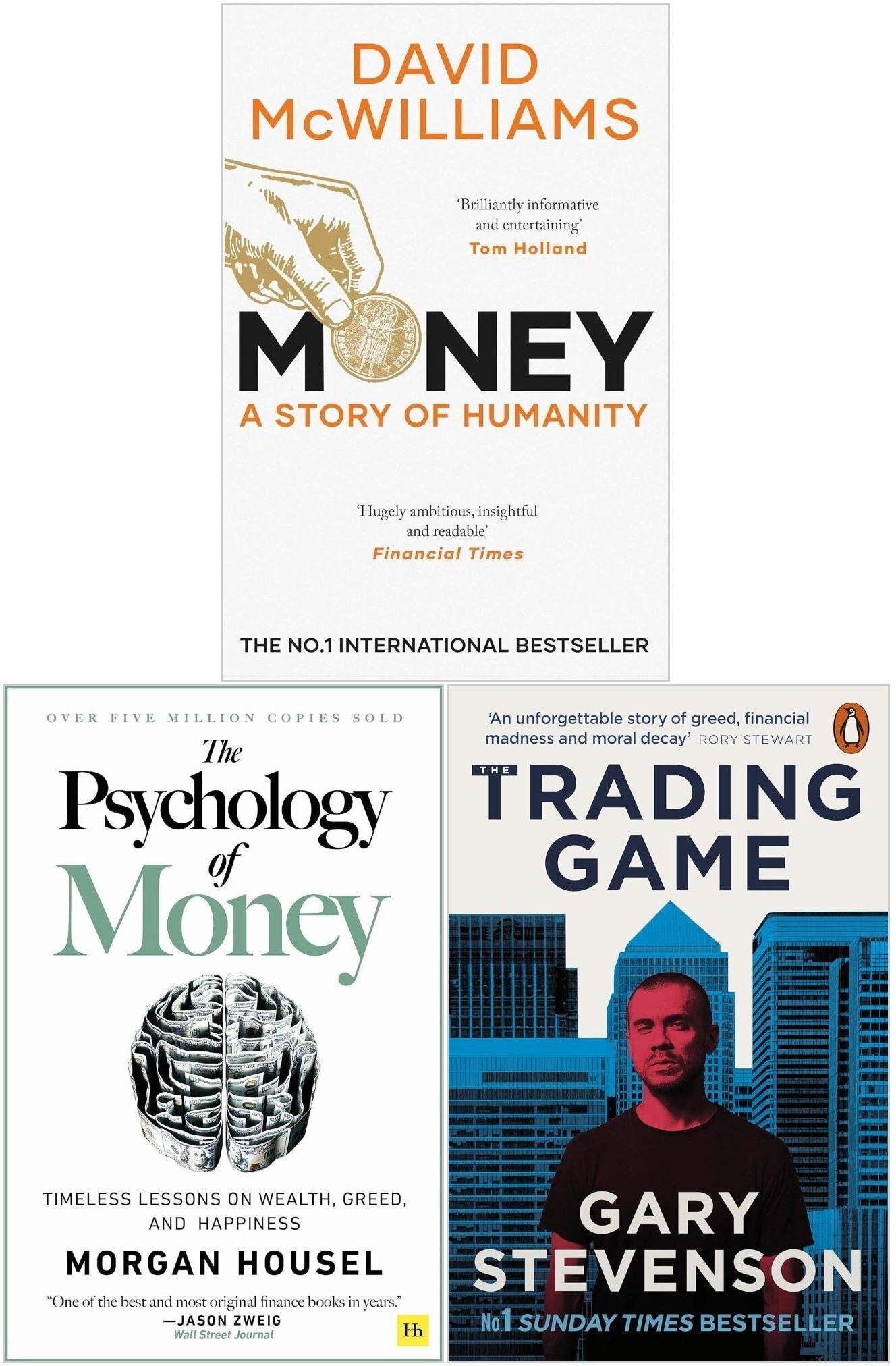
Harriman House Psychology of Money, The Trading Game and Money: A Story of Humanity 3 Books Collection SetPsychology of Money by Morgan Housel Doing well with money isn't necessarily about what you know. It's about how you behave. And behavior is hard to teach, even to really smart people. Money – investing, personal finance, and business decisions – is typically taught as a math-based field, where data and formulas tell us exactly what to do. But in the real world people don't make financial decisions on a spreadsheet. They make them at the dinner table, or in a meeting room, where personal history, your own unique view of the world, ego, pride, marketing, and odd incentives are scrambled together. The Trading Game by Gary Stevenson Ever since he was a kid, kicking broken footballs on the streets of East London in the shadow of Canary Wharf's skyscrapers, Gary wanted something better. Something a whole lot bigger. Then he won a competition run by a bank: 'The Trading Game'. The prize: a golden ticket to a new life, as the youngest trader in the whole city. A place where you could make more money than you'd ever imagined. Where your colleagues are dysfunctional maths geniuses, overfed public schoolboys and borderline psychopaths, yet they start to feel like family. Where soon you're the bank's most profitable trader, dealing in nearly a trillion dollars. A day. Where you dream of numbers in your sleep - and then stop sleeping at all. Money: A Story of Humanity by David McWilliams MONEY. The object of our desires. The engine of our genius. Humanity’s greatest invention. From clay tablets in Mesopotamia to today’s cryptocurrency, global economist David McWilliams takes us on an epic journey of innovation, disruption and transformation that is an astonishing new history of our species. The question is, over 5,000 years, have we changed money – or has money changed us?22,99 £*Shipping: 2,99 £Secure redirect to the provider
-
Simon & Schuster/Harriman House/Cornerstone Mind Hacking, The Psychology Of Money and Atomic Habits 3 Books Collection SetMind Hacking by Sir John Hargrave Have you ever wished you could reprogram your brain, just as a hacker would a computer? In this 3-step guide to improving your mental habits, learn to take charge of your mind and banish negative thoughts, habits, and anxiety—in just twenty-one days! A seasoned author, comedian, and entrepreneur, Sir John Hargrave once suffered from unhealthy addictions, anxiety, and poor mental health. After cracking the code to unlocking his mind’s full and balanced potential, his entire life changed for the better. In Mind Hacking, Hargrave reveals the formula that allowed him to overcome negativity and eliminate mental problems at their core. The Psychology Of Money by Morgan Housel Doing well with money isn't necessarily about what you know. It's about how you behave. And behavior is hard to teach, even to really smart people. Money – investing, personal finance, and business decisions – is typically taught as a math-based field, where data and formulas tell us exactly what to do. But in the real world people don't make financial decisions on a spreadsheet. They make them at the dinner table, or in a meeting room, where personal history, your own unique view of the world, ego, pride, marketing, and odd incentives are scrambled together. In The Psychology of Money, award-winning author Morgan Housel shares 19 short stories exploring the strange ways people think about money and teaches you how to make better sense of one of life's most important topics. Atomic Habits by James Clear Transform your life with tiny changes in behaviour, starting now. People think that when you want to change your life, you need to think big. But world-renowned habits expert James Clear has discovered another way. He knows that real change comes from the compound effect of hundreds of small decisions: doing two push-ups a day, waking up five minutes early, or holding a single short phone call. He calls them atomic habits.23,99 £*Shipping: 2,99 £Secure redirect to the provider
-
What is the research question in psychology?
The research question in psychology is a specific inquiry that a researcher aims to answer through systematic investigation and analysis. It typically focuses on understanding human behavior, cognition, emotions, or mental processes. Research questions in psychology are designed to be clear, specific, and testable, guiding the research process and helping to generate new knowledge and insights in the field. By formulating research questions, psychologists can explore various phenomena, theories, and hypotheses to advance our understanding of the human mind and behavior. **
-
What are possible research topics in psychology?
Possible research topics in psychology include studying the effects of social media on mental health, exploring the impact of childhood trauma on adult relationships, investigating the effectiveness of different therapy techniques for treating anxiety disorders, examining the relationship between personality traits and academic success, and researching the factors that contribute to the development of eating disorders. These topics offer a wide range of opportunities for researchers to deepen our understanding of human behavior and mental processes. **
-
What is the DNA Ancestry Test?
The DNA Ancestry Test is a genetic test that analyzes an individual's DNA to provide information about their ethnic and geographic origins. It can help people trace their ancestry back to specific regions or populations around the world. The test compares the individual's DNA to reference databases of genetic markers from different populations to estimate their genetic ancestry. This can provide insights into a person's heritage and help them better understand their genetic background. **
-
Which courses combine biology, history, and psychology?
Courses such as Behavioral Genetics, Evolutionary Psychology, and History of Medicine often combine elements of biology, history, and psychology. These courses explore how biological factors influence behavior, how historical events have shaped our understanding of medicine and psychology, and how psychological theories have evolved over time. Students in these courses can gain a comprehensive understanding of the interconnectedness of these disciplines and how they contribute to our understanding of human behavior and health. **
* All prices are inclusive of VAT and, if applicable, plus shipping costs. The offer information is based on the details provided by the respective shop and is updated through automated processes. Real-time updates do not occur, so deviations can occur in individual cases. ** Note: Parts of this content were created by AI.