Buy familysearch.eu ?
We are moving the project
familysearch.eu .
Are you interested in purchasing the domain
familysearch.eu ?
domain@kv-gmbh.de · 0541-91531010
Buy familysearch.eu ?
What is better for genealogy research, Ancestry or MyHeritage?
Both Ancestry and MyHeritage are popular genealogy research platforms, and the choice between the two ultimately depends on individual preferences and needs. Ancestry has a larger database of historical records and documents, making it a great choice for those looking to delve deep into their family history. On the other hand, MyHeritage offers a more global approach, with a focus on international records and DNA testing. Both platforms have their own unique features and strengths, so it's best to explore both and see which one aligns best with your research goals. **
What is more useful for genealogy research: Ancestry or MyHeritage?
Both Ancestry and MyHeritage are useful for genealogy research, but they have different strengths. Ancestry has a larger database of historical records and documents, making it a valuable resource for building family trees and finding historical records. On the other hand, MyHeritage offers a more global approach with a focus on international records and DNA testing, making it useful for those with ancestors from outside the United States. Ultimately, the choice between the two depends on the specific needs and research goals of the individual genealogist. **

Similar search terms for Packaging
Top-Angebote
Products related to Packaging:
-
Barolo L''Astemia 2021 (packaging)The Barolo de L’Astemia is born as the most authentic expression of the Langhe tradition, a wine that encapsulates the deep identity of a winery firmly rooted in its territory. Here, the culture of Nebbiolo has been passed down for generations, and L’Astemia seeks to embody, with a free spirit and without constraints, the tradition of this great red wine. This Barolo represents the essence of the estate’s production: a classic red, without excess, deeply rooted in the Cannubi area, the historical and symbolic heart of the appellation. In this unique context, the winery pursues an idea of wine as a narrative of the land, capable of combining elegance, balance, and depth.L’Astemia produces this Barolo from Nebbiolo grapes sourced from selected vineyards near the winery. Harvesting takes place at full ripeness, followed by a traditional vinification: controlled fermentations and long maceration on the skins to enhance extraction, structure, and aromatic complexity. The aging process is lengthy and takes place between wood and bottle, where the wine evolves slowly, harmonizing tannins and aromatic components. The result is a classically styled Barolo that precisely reflects both the vintage and its terroir of origin.In the glass, Barolo L’Astemia shows a bright garnet red color, typical of Nebbiolo, with orange reflections that highlight its long maturation and the passage of time. On the nose, notes of fresh red fruit dominate, accompanied by hints of sweet spices and delicate aromas of dried flowers. On the palate, it is full and savory, with a dense yet elegant tannic structure, offering an intense but measured and refined profile for a Barolo. The sip is balanced and smooth, favoring finesse over power. It pairs naturally with red meats, game, and aged cheeses, complementing with elegance the most structured dishes of Piedmontese culinary tradition.41,00 £*Shipping: 48,00 £Secure redirect to the provider
-
Franciacorta Brut Contadi Castaldi (Packaging)The Brut Franciacorta by Contadi Castaldi is a vibrant expression of the union between Chardonnay and one of the most suited Italian territories for the production of Italian sparkling wines. Smoothness and drinkability are the key words to identify the production style adopted, without giving up complexity and longevity. The more than century-old origins of the area's wine history are reflected in the choice of the winery's name, as the word "contadi" refers to the counties of Franciacorta, while "Castaldi" refers to the owners of these counties. Although the winery was founded in Adro in 1991, which is much more recent, the name of the Moretti Family is one that has made history in Franciacorta, being the founder of one of the most renowned Italian wineries in the world, namely Bellavista. The Brut by Contadi Castaldi comes from a blend mainly composed of Chardonnay, with small percentages of Pinot Bianco and Pinot Nero. Fermentation takes place in stainless steel tanks, while for aging, partly steel containers and partly in barriques. Subsequently, the sparkling wine ages on the lees for 20-26 months, and it is precisely this last resting period that enriches the wine, giving it depth and body. The Contadi Castaldi Brut Franciacorta presents itself in the glass with a bright straw yellow, denoting an exemplary fine perlage. The nose is lively, ranging from floral hints of linden and jasmine to more fleshy notes of peach and citrus. The sip, crunchy and slender, impresses with its extreme freshness and drinkability, but is enriched by a well-integrated creaminess. A liquid endowed with extreme versatility, it pairs well with appetizers and delicate fish dishes, creating interesting combinations even with preparations such as soups and risottos. Versatility at the service of elegance19,00 £*Shipping: 48,00 £Secure redirect to the provider
-
Orion A Brief History of Everyone Who Ever Lived by Adam Rutherford – The Stories in Our DNAA Brief History of Everyone Who Ever Lived by Adam Rutherford This is a story about you.It is the history of who you are and how you came to be. It is unique to you, as it is to each of the 100 billion modern humans who have ever drawn breath. But it is also our collective story, because in every one of our genomes we each carry the history of our species - births, deaths, disease, war, famine, migration and a lot of sex.In this captivating journey through the expanding landscape of genetics, Adam Rutherford reveals what our genes now tell us about human history, and what history can now tell us about our genes. From Neanderthals to murder, from redheads to race, dead kings to plague, evolution to epigenetics, this is a demystifying and illuminating new portrait of who we are and how we came to be.4,95 £*Shipping: 1,99 £Secure redirect to the provider


-
Which DNA tests are best for genealogy research?
The best DNA tests for genealogy research are those offered by AncestryDNA, 23andMe, and MyHeritage. These tests provide a wide range of genetic information and have large databases for matching with potential relatives. AncestryDNA and 23andMe are particularly popular for their extensive databases and comprehensive ancestry reports, while MyHeritage offers a unique feature of matching with individuals who have uploaded their DNA data from other testing companies. Overall, these tests are highly recommended for genealogy research due to their accuracy and the potential for finding genetic relatives. **
-
How can one conduct genealogy research using DNA tests?
To conduct genealogy research using DNA tests, one can start by choosing a reputable DNA testing company and ordering a DNA test kit. Once the kit arrives, follow the instructions to collect a DNA sample, typically through a saliva sample. After sending the sample back to the company, wait for the results to be processed. The results will provide information about one's genetic ethnicity and potential matches with other individuals who share DNA. By comparing these matches with known family history and genealogy records, one can potentially uncover new information about their ancestry and family connections. **
-
The packaging process of DNA only occurs in eukaryotes.
The statement is not entirely accurate. While eukaryotes do have a more complex and regulated packaging process of DNA compared to prokaryotes, both types of organisms have mechanisms to condense and organize their genetic material. In eukaryotes, DNA is tightly wound around histone proteins to form chromatin, which further condenses into chromosomes during cell division. Prokaryotes also have proteins that help in compacting their DNA, although their packaging process is simpler compared to eukaryotes. **
-
What is the purpose and principle of DNA packaging?
The purpose of DNA packaging is to efficiently store and protect the long strands of DNA within the cell. DNA packaging also plays a crucial role in regulating gene expression by controlling access to the genetic information stored in the DNA. The principle of DNA packaging involves wrapping the DNA around histone proteins to form nucleosomes, which then further condense into chromatin fibers and eventually into chromosomes. This packaging allows the DNA to fit within the nucleus of the cell and ensures that it can be accurately replicated and transmitted to daughter cells during cell division. **


What are the packaging states of DNA in biology?
In biology, DNA can exist in different packaging states depending on the cell's needs. The primary packaging state is the double helix structure, where the DNA is wrapped around histone proteins to form nucleosomes. These nucleosomes can further coil and condense to form chromatin, which can then condense even further to form chromosomes during cell division. Additionally, DNA can also exist in a more open and accessible state during processes such as transcription and replication. These different packaging states allow for the efficient storage, replication, and expression of genetic information within the cell. **
Only in eukaryotes does the packaging process of DNA occur.
In eukaryotes, DNA is packaged into chromatin, which consists of DNA wrapped around histone proteins. This packaging process helps to condense the DNA and regulate gene expression. In prokaryotes, DNA is not packaged in the same way as in eukaryotes, as they lack histone proteins and do not have a true nucleus. The packaging of DNA in eukaryotes allows for the efficient storage and organization of genetic material within the nucleus. **
Top-Angebote
Products related to Packaging:
-
Numskull TUBBZ Elf Buddy Boxed Edition - Collectible Figure in Retail Packaging - Retail PackagingBring the festive spirit of Buddy to your collection with this boxed TUBBZ figure. Presented in retail packaging, this officially styled collectible captures the much-loved Christmas character from the film Elf in TUBBZ’s distinctive duck-inspired format. It is a fun display piece for fans of the movie, seasonal collectors, and anyone who enjoys character collectibles with a playful twist. Key features: - Buddy character from Elf - TUBBZ collectible figure - Supplied in a presentation box - Suitable for display or gifting Product details: This is a boxed Buddy collectible from the Numskull TUBBZ range. The product is supplied as one retail-packaged item. Please refer to the packaging for product-specific safety and care information.14,99 £*Shipping: 3,95 £Secure redirect to the provider
-
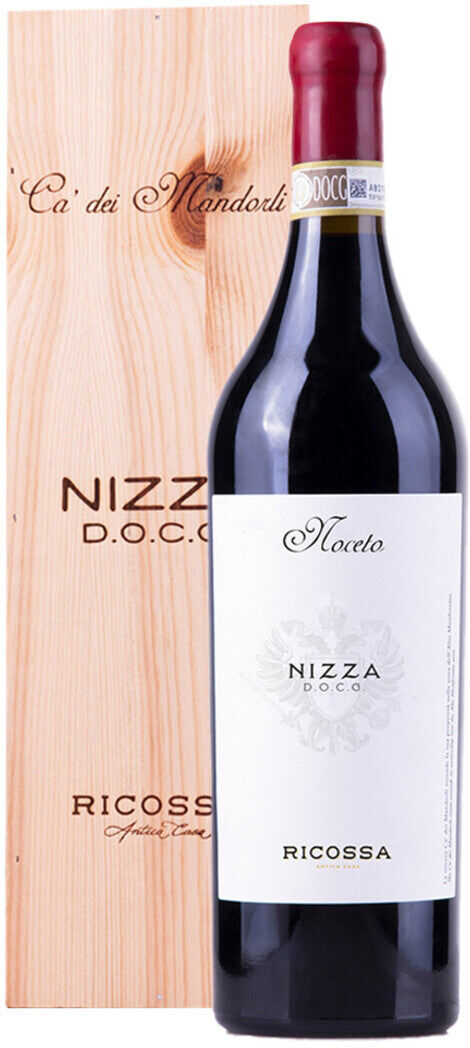
Nizza Magnum Ricossa 2018 (Packaging)Nizza Magnum Ricossa represents an authentic expression of the oenological exclusivity of Piedmont, a region famous for its rich wine tradition and distinctive terroirs. This elegant wine, the result of Ricossa's passion and experience, finds its roots in the Ca’ dei Mandorli estate in Castel Boglione, in the heart of the picturesque landscape of Asti's Monferrato. With its 80 hectares of vineyards composing a natural amphitheater of rare beauty, of which 74 are dedicated to vine cultivation, this estate embodies the essence of Piedmontese viticulture. The Ca’ dei Mandorli estate, located in Alto Monferrato, extends over a limestone-clay soil that gives the wine a richness of intense nuances. The Barbera grapes, carefully grown in the Noceto vineyard, undergo a meticulously orchestrated vinification and aging process. The training system follows the traditional method, using a trellis that promotes vertical growth of the vegetation where the density is at least 4000 plants per hectare, with an average number of buds not exceeding 10 per stump, ensuring balanced production. Guyot pruning systems are adopted to ensure precise vine management, and as for the wine aging, it proceeds with a maturation of about 18 months, of which 6 are spent in wood. This Barbera, a symbol of craftsmanship and respect for the territory, emerges as a quality wine, complex and structured. Nizza di Ricossa, in its magnum version, presents itself with an intense ruby red color, enriched by violet reflections that herald an enveloping sensory experience. On the nose, elegant balsamic hints of thyme and sage are perceived, followed by delicate notes of vanilla, licorice, and cocoa. In the mouth, this red offers surprising intensity and roundness, with a persistent finish that leaves an indelible impression. Perfect for accompanying typical dishes of Piedmontese tradition, such as stuffed pasta or braised meat-based second courses, this bottle is contained in a wooden packaging, making it an elegant ideal gift to celebrate the excellence of Piedmont and its rich wine tradition.56,00 £*Shipping: 48,00 £Secure redirect to the provider
-
Barolo L''Astemia 2021 (packaging)The Barolo de L’Astemia is born as the most authentic expression of the Langhe tradition, a wine that encapsulates the deep identity of a winery firmly rooted in its territory. Here, the culture of Nebbiolo has been passed down for generations, and L’Astemia seeks to embody, with a free spirit and without constraints, the tradition of this great red wine. This Barolo represents the essence of the estate’s production: a classic red, without excess, deeply rooted in the Cannubi area, the historical and symbolic heart of the appellation. In this unique context, the winery pursues an idea of wine as a narrative of the land, capable of combining elegance, balance, and depth.L’Astemia produces this Barolo from Nebbiolo grapes sourced from selected vineyards near the winery. Harvesting takes place at full ripeness, followed by a traditional vinification: controlled fermentations and long maceration on the skins to enhance extraction, structure, and aromatic complexity. The aging process is lengthy and takes place between wood and bottle, where the wine evolves slowly, harmonizing tannins and aromatic components. The result is a classically styled Barolo that precisely reflects both the vintage and its terroir of origin.In the glass, Barolo L’Astemia shows a bright garnet red color, typical of Nebbiolo, with orange reflections that highlight its long maturation and the passage of time. On the nose, notes of fresh red fruit dominate, accompanied by hints of sweet spices and delicate aromas of dried flowers. On the palate, it is full and savory, with a dense yet elegant tannic structure, offering an intense but measured and refined profile for a Barolo. The sip is balanced and smooth, favoring finesse over power. It pairs naturally with red meats, game, and aged cheeses, complementing with elegance the most structured dishes of Piedmontese culinary tradition.41,00 £*Shipping: 48,00 £Secure redirect to the provider
-
Franciacorta Brut Contadi Castaldi (Packaging)The Brut Franciacorta by Contadi Castaldi is a vibrant expression of the union between Chardonnay and one of the most suited Italian territories for the production of Italian sparkling wines. Smoothness and drinkability are the key words to identify the production style adopted, without giving up complexity and longevity. The more than century-old origins of the area's wine history are reflected in the choice of the winery's name, as the word "contadi" refers to the counties of Franciacorta, while "Castaldi" refers to the owners of these counties. Although the winery was founded in Adro in 1991, which is much more recent, the name of the Moretti Family is one that has made history in Franciacorta, being the founder of one of the most renowned Italian wineries in the world, namely Bellavista. The Brut by Contadi Castaldi comes from a blend mainly composed of Chardonnay, with small percentages of Pinot Bianco and Pinot Nero. Fermentation takes place in stainless steel tanks, while for aging, partly steel containers and partly in barriques. Subsequently, the sparkling wine ages on the lees for 20-26 months, and it is precisely this last resting period that enriches the wine, giving it depth and body. The Contadi Castaldi Brut Franciacorta presents itself in the glass with a bright straw yellow, denoting an exemplary fine perlage. The nose is lively, ranging from floral hints of linden and jasmine to more fleshy notes of peach and citrus. The sip, crunchy and slender, impresses with its extreme freshness and drinkability, but is enriched by a well-integrated creaminess. A liquid endowed with extreme versatility, it pairs well with appetizers and delicate fish dishes, creating interesting combinations even with preparations such as soups and risottos. Versatility at the service of elegance19,00 £*Shipping: 48,00 £Secure redirect to the provider
-
What is better for genealogy research, Ancestry or MyHeritage?
Both Ancestry and MyHeritage are popular genealogy research platforms, and the choice between the two ultimately depends on individual preferences and needs. Ancestry has a larger database of historical records and documents, making it a great choice for those looking to delve deep into their family history. On the other hand, MyHeritage offers a more global approach, with a focus on international records and DNA testing. Both platforms have their own unique features and strengths, so it's best to explore both and see which one aligns best with your research goals. **
-
What is more useful for genealogy research: Ancestry or MyHeritage?
Both Ancestry and MyHeritage are useful for genealogy research, but they have different strengths. Ancestry has a larger database of historical records and documents, making it a valuable resource for building family trees and finding historical records. On the other hand, MyHeritage offers a more global approach with a focus on international records and DNA testing, making it useful for those with ancestors from outside the United States. Ultimately, the choice between the two depends on the specific needs and research goals of the individual genealogist. **
-
Which DNA tests are best for genealogy research?
The best DNA tests for genealogy research are those offered by AncestryDNA, 23andMe, and MyHeritage. These tests provide a wide range of genetic information and have large databases for matching with potential relatives. AncestryDNA and 23andMe are particularly popular for their extensive databases and comprehensive ancestry reports, while MyHeritage offers a unique feature of matching with individuals who have uploaded their DNA data from other testing companies. Overall, these tests are highly recommended for genealogy research due to their accuracy and the potential for finding genetic relatives. **
-
How can one conduct genealogy research using DNA tests?
To conduct genealogy research using DNA tests, one can start by choosing a reputable DNA testing company and ordering a DNA test kit. Once the kit arrives, follow the instructions to collect a DNA sample, typically through a saliva sample. After sending the sample back to the company, wait for the results to be processed. The results will provide information about one's genetic ethnicity and potential matches with other individuals who share DNA. By comparing these matches with known family history and genealogy records, one can potentially uncover new information about their ancestry and family connections. **
Similar search terms for Packaging
-
Orion A Brief History of Everyone Who Ever Lived by Adam Rutherford – The Stories in Our DNAA Brief History of Everyone Who Ever Lived by Adam Rutherford This is a story about you.It is the history of who you are and how you came to be. It is unique to you, as it is to each of the 100 billion modern humans who have ever drawn breath. But it is also our collective story, because in every one of our genomes we each carry the history of our species - births, deaths, disease, war, famine, migration and a lot of sex.In this captivating journey through the expanding landscape of genetics, Adam Rutherford reveals what our genes now tell us about human history, and what history can now tell us about our genes. From Neanderthals to murder, from redheads to race, dead kings to plague, evolution to epigenetics, this is a demystifying and illuminating new portrait of who we are and how we came to be.4,95 £*Shipping: 1,99 £Secure redirect to the provider
-
Amarone Classico Magnum Bertani 2012 (Packaging)The Amarone Classico by Bertani enclosed within it the timeless charm of the wine, the wine can tell the story of an entire territory, the Valpolicella, always pearl wine in Italy and worldwide. A wine with recent tradition, but at the same time a wine has become a symbol of this charming corner of Italy; a wine that has taken decades of refinements and discoveries to reach the qualitative and today can offer. An history that starts in the vineyard, with careful selection of grapes that are left to wither along in a completely natural and which are then fermented, in the middle of winter, very slowly, then ensuring a long maturation that leads Amarone to achieve a balance as to give a truly amazing longevity, even several decades. The Amarone Classico by Bertani is a wine that tells an unique style, a classic, traditional and has no need to change. Corvina and Rondinella are harvested in mid-September and after a careful selection of the grapes are left to dry for about 120 days in the fruit; then it follows a slow fermentation that lasts for 50 days and aged for about six years in oak casks, with a subsequent stabilization in the bottle for another 12 months. And this is the story that tells of Amarone Classico by Bertani and allowing you to give us an intense and complex bouquet where typical notes of plum, cherry and marasca alternating with dried fruit, liquorice and spices. The taste is soft and seductive, soft and persistent; it’s the emblem of Valpolicella...172,00 £*Shipping: 48,00 £Secure redirect to the provider
-
Barolo L''Astemia 2020 (packaging)The Barolo de L’Astemia is born as the most authentic expression of the Langhe tradition, a wine that encapsulates the deep identity of a winery firmly rooted in its territory. Here, the culture of Nebbiolo has been passed down for generations, and L’Astemia seeks to embody, with a free spirit and without constraints, the tradition of this great red wine. This Barolo represents the essence of the estate’s production: a classic red, without excess, deeply rooted in the Cannubi area, the historical and symbolic heart of the appellation. In this unique context, the winery pursues an idea of wine as a narrative of the land, capable of combining elegance, balance, and depth.L’Astemia produces this Barolo from Nebbiolo grapes sourced from selected vineyards near the winery. Harvesting takes place at full ripeness, followed by a traditional vinification: controlled fermentations and long maceration on the skins to enhance extraction, structure, and aromatic complexity. The aging process is lengthy and takes place between wood and bottle, where the wine evolves slowly, harmonizing tannins and aromatic components. The result is a classically styled Barolo that precisely reflects both the vintage and its terroir of origin.In the glass, Barolo L’Astemia shows a bright garnet red color, typical of Nebbiolo, with orange reflections that highlight its long maturation and the passage of time. On the nose, notes of fresh red fruit dominate, accompanied by hints of sweet spices and delicate aromas of dried flowers. On the palate, it is full and savory, with a dense yet elegant tannic structure, offering an intense but measured and refined profile for a Barolo. The sip is balanced and smooth, favoring finesse over power. It pairs naturally with red meats, game, and aged cheeses, complementing with elegance the most structured dishes of Piedmontese culinary tradition.42,00 £*Shipping: 48,00 £Secure redirect to the provider
-
The packaging process of DNA only occurs in eukaryotes.
The statement is not entirely accurate. While eukaryotes do have a more complex and regulated packaging process of DNA compared to prokaryotes, both types of organisms have mechanisms to condense and organize their genetic material. In eukaryotes, DNA is tightly wound around histone proteins to form chromatin, which further condenses into chromosomes during cell division. Prokaryotes also have proteins that help in compacting their DNA, although their packaging process is simpler compared to eukaryotes. **
-
What is the purpose and principle of DNA packaging?
The purpose of DNA packaging is to efficiently store and protect the long strands of DNA within the cell. DNA packaging also plays a crucial role in regulating gene expression by controlling access to the genetic information stored in the DNA. The principle of DNA packaging involves wrapping the DNA around histone proteins to form nucleosomes, which then further condense into chromatin fibers and eventually into chromosomes. This packaging allows the DNA to fit within the nucleus of the cell and ensures that it can be accurately replicated and transmitted to daughter cells during cell division. **
-
What are the packaging states of DNA in biology?
In biology, DNA can exist in different packaging states depending on the cell's needs. The primary packaging state is the double helix structure, where the DNA is wrapped around histone proteins to form nucleosomes. These nucleosomes can further coil and condense to form chromatin, which can then condense even further to form chromosomes during cell division. Additionally, DNA can also exist in a more open and accessible state during processes such as transcription and replication. These different packaging states allow for the efficient storage, replication, and expression of genetic information within the cell. **
-
Only in eukaryotes does the packaging process of DNA occur.
In eukaryotes, DNA is packaged into chromatin, which consists of DNA wrapped around histone proteins. This packaging process helps to condense the DNA and regulate gene expression. In prokaryotes, DNA is not packaged in the same way as in eukaryotes, as they lack histone proteins and do not have a true nucleus. The packaging of DNA in eukaryotes allows for the efficient storage and organization of genetic material within the nucleus. **
* All prices are inclusive of VAT and, if applicable, plus shipping costs. The offer information is based on the details provided by the respective shop and is updated through automated processes. Real-time updates do not occur, so deviations can occur in individual cases. ** Note: Parts of this content were created by AI.